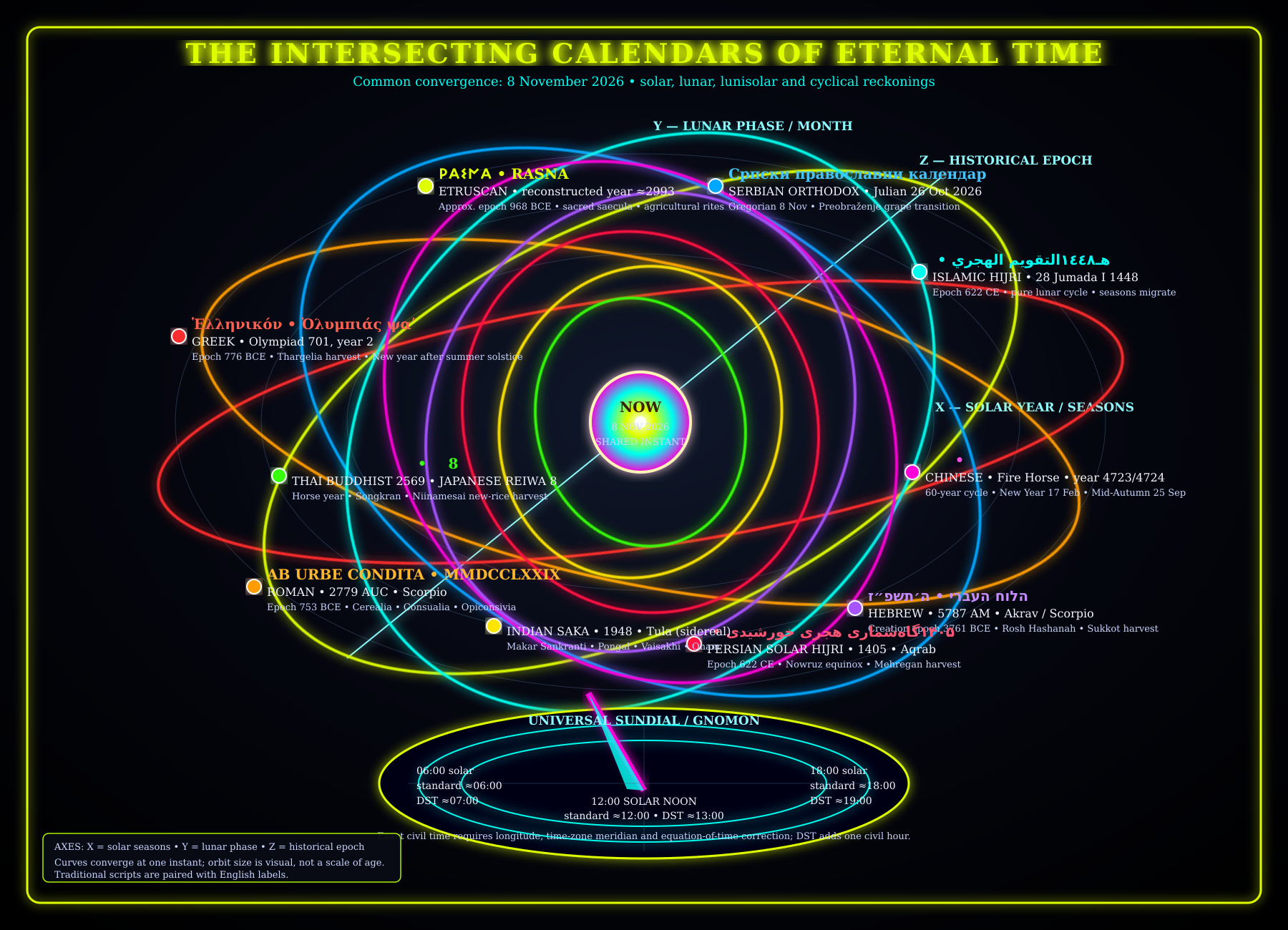
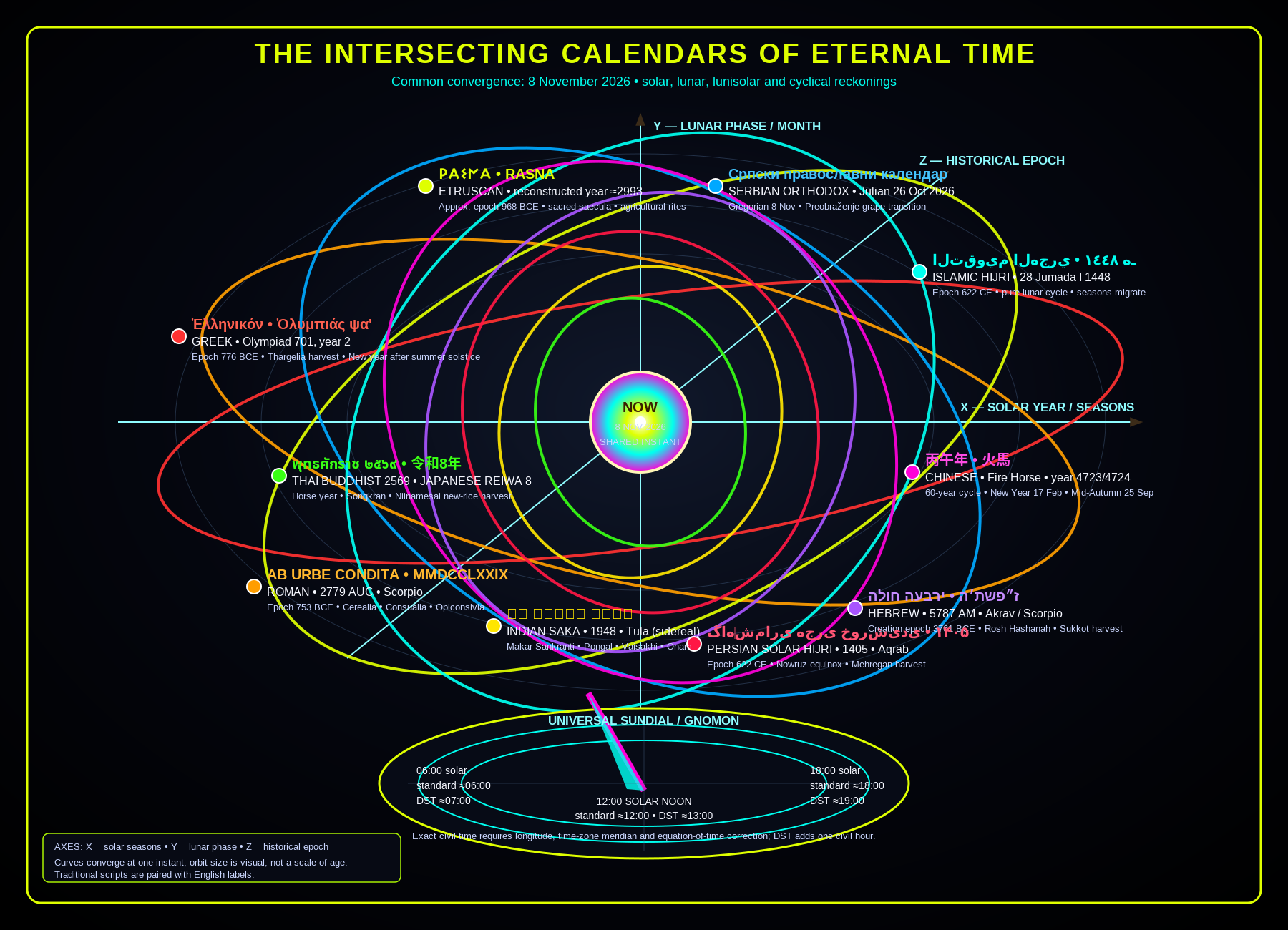
Live shared instant
Tap any glowing moving dot to open its native date, English date, time, fortune and horoscope.
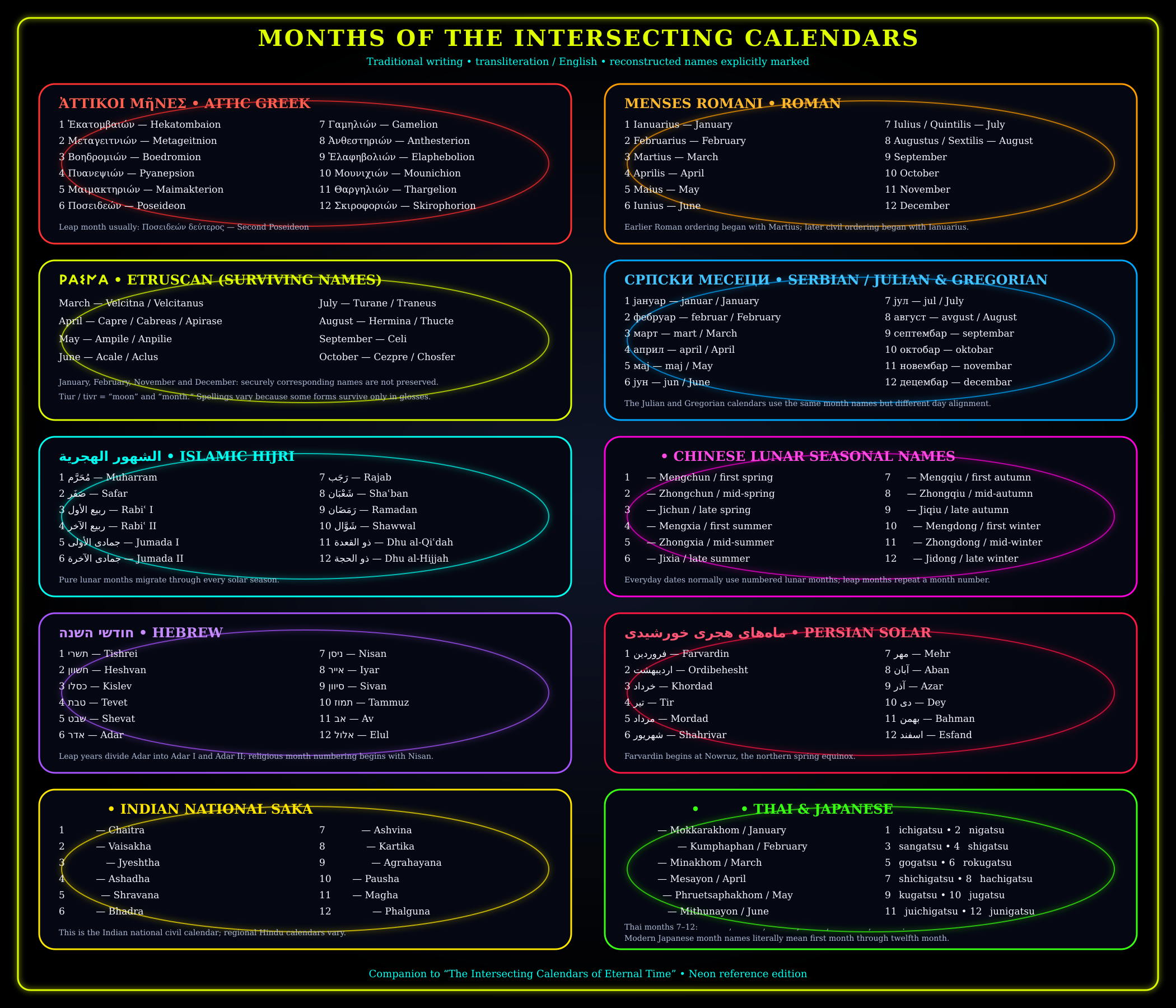
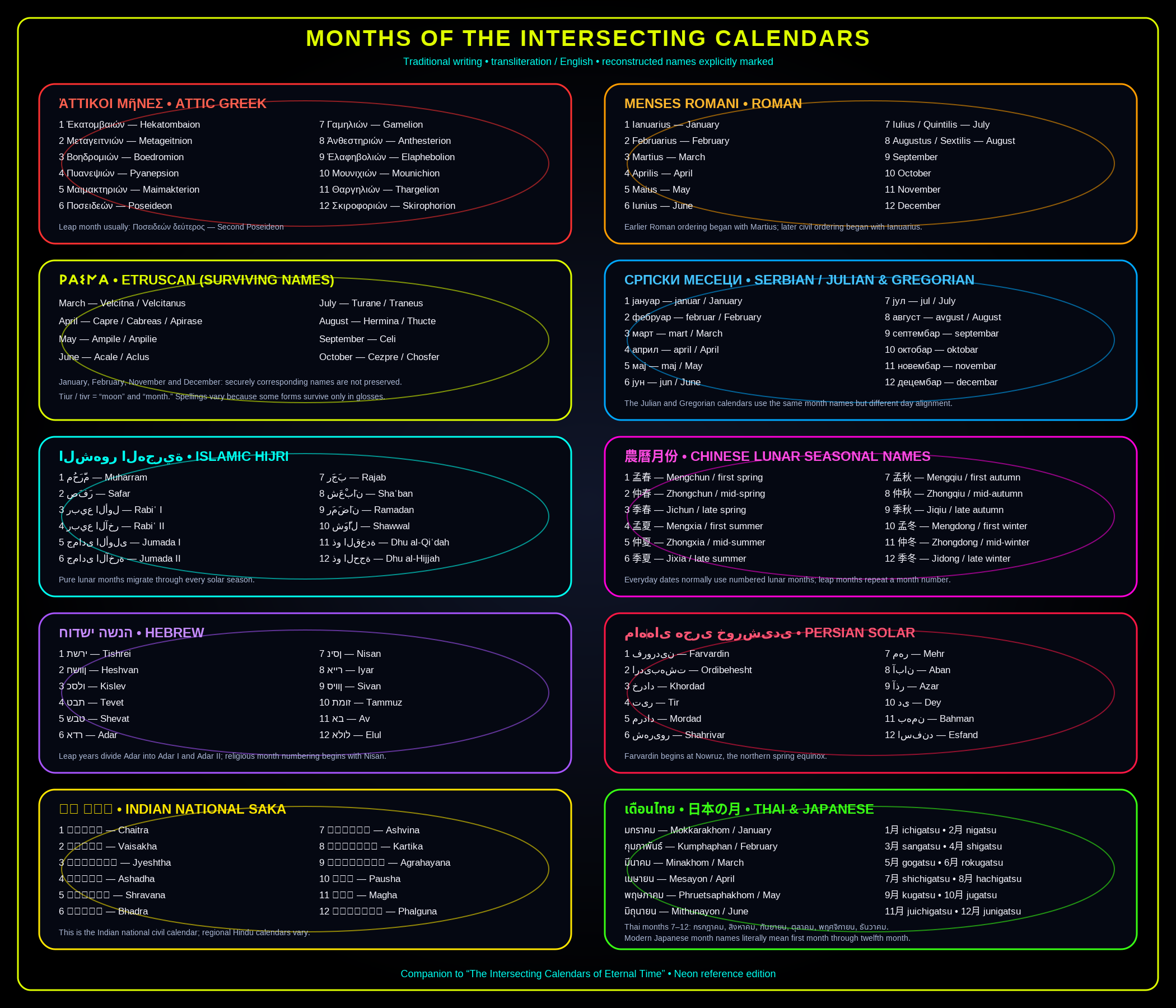
Ancient epochs • lunar and solar algorithms • astrology • harvest transitions • eternal cycles
An epoch is a counting origin. It does not necessarily prove that the calendar or the associated people existed in that starting year.
Year follows Earth’s seasonal orbit.
Twelve moon cycles; seasons migrate.
Lunar months corrected by leap months.
12:00
Solar time: determined by the Sun’s position.
Standard civil time: adjusted for longitude, the time-zone meridian and the equation of time.
DST: adds one civil hour; it does not change the Sun or the sundial shadow.
A construction-accurate sundial requires a city or exact latitude and longitude.
For cultural entertainment; not a factual prediction.